What exactly is the DCCC?
The most obscure and important race in the March 5th election


What if we told you that when you look at your ballot this March, you’re going to see a set of names running for a committee that you may have never heard of?
And what if we told you that this committee is a subtle but powerful locus of politics in San Francisco?
Well, the title probably gave it away, but that committee is called the DCCC. And today we’re going to talk about it.
Disclaimer:
First off, we should be super clear — VoteSF is not a partisan organization. We just want to make voting in SF more clear and easy. But we really don’t care who or what you end up voting for.
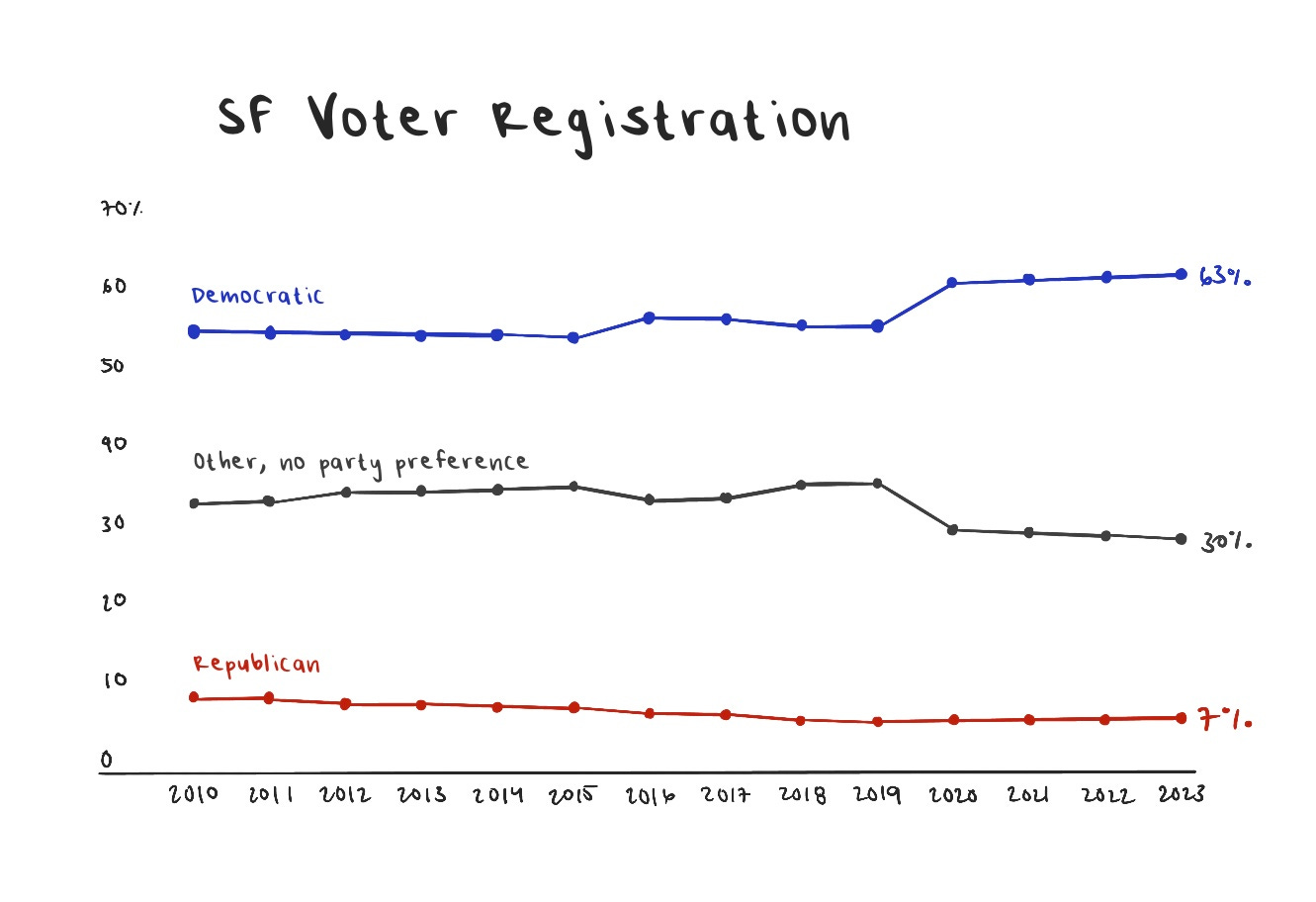
That said, we also need to be realistic about SF’s politics. 63% of registered voters in San Francisco will be choosing between Democratic candidates for the DCCC, which means that there’s likely a greater need for information for that party. So, we focused this post on the DCCC. However, we do touch on the equivalent committee for the Republican Party (RCCC) later in this post. No other parties (Independent, Green, Peace and Freedom) will have races for their committees.
What is the DCCC?
We’ve all heard of the Democratic Party. But odds are, you may have not heard of the DCCC — less commonly known as the Democratic County Central Committee.
This committee is made up of 24 seats, and serves as San Francisco County’s representation for the Democratic party.
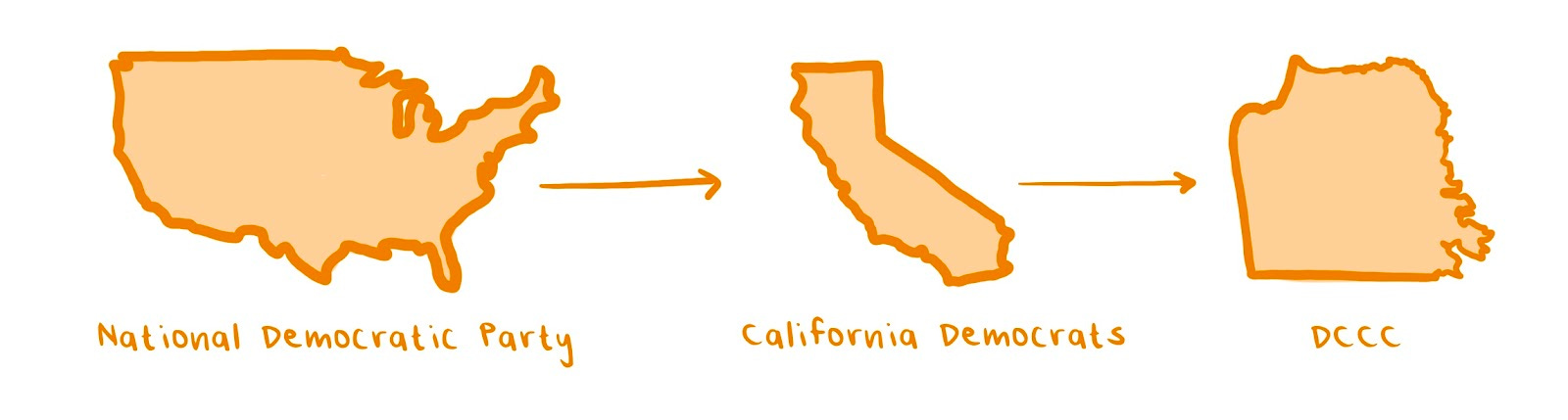
As it turns out, the Democratic party has governing bodies at the national level (the national Democratic Party), the state level (California Democratic Party), and county levels (like the DCCC). And since SF is its own county, we have our very own Democratic governing body.
Why does the DCCC matter for SF?
How can a political body that few people have heard of really be so consequential? To understand that, we have to start with a quick summary of what the DCCC actually does.
Now, their website lists several responsibilities like fundraising, conducting polls, and chartering local Democratic clubs. But there is one primarily consequential way that the DCCC influences SF politics: endorsements.
For example, when you get your next ballot in November of this year, you won’t just be voting in the Presidential election; you’ll also be voting for your district supervisor for the Board of Supervisors. (If none of that rings a bell, you should check out our post on how the city is run.)
Next to some candidates’ names, you’ll see a note saying that they were endorsed by the Democratic party. Want to guess who’s in charge of making those endorsements?
That’s right, the DCCC.
Now, this may not seem like a big deal, but it actually makes an enormous impact on the outcomes of our local elections. This is especially high stakes when you consider how close the District Supervisor elections tend to be — several in the last election were decided by just over 100 votes.
Want to know the real kicker?
Being a member of the DCCC doesn’t prevent you from running for other positions, like District Supervisor for example. This means that people on the DCCC can endorse themselves for other races.
This means that being on the DCCC is a really good way to accrue a lot of power in SF politics very quickly, so it’s an extremely consequential race.
Why is it important beyond SF?
There are two notable ways that the DCCC influences broader politics:
Resolutions
Talent pipeline
Let’s talk about resolutions first.
One of the DCCC’s main responsibilities is to pass resolutions. These don’t have any actual enforceability or legislative power. However, they do serve to basically express the will and preferences of the county’s Democratic party on different issues.
In a county and city that is heavily Democratic, this can help to set or support policy priorities for legislative bodies, like the Board of Supervisors.
Alright, now let’s get to the talent pipeline.
Remember this diagram from earlier?
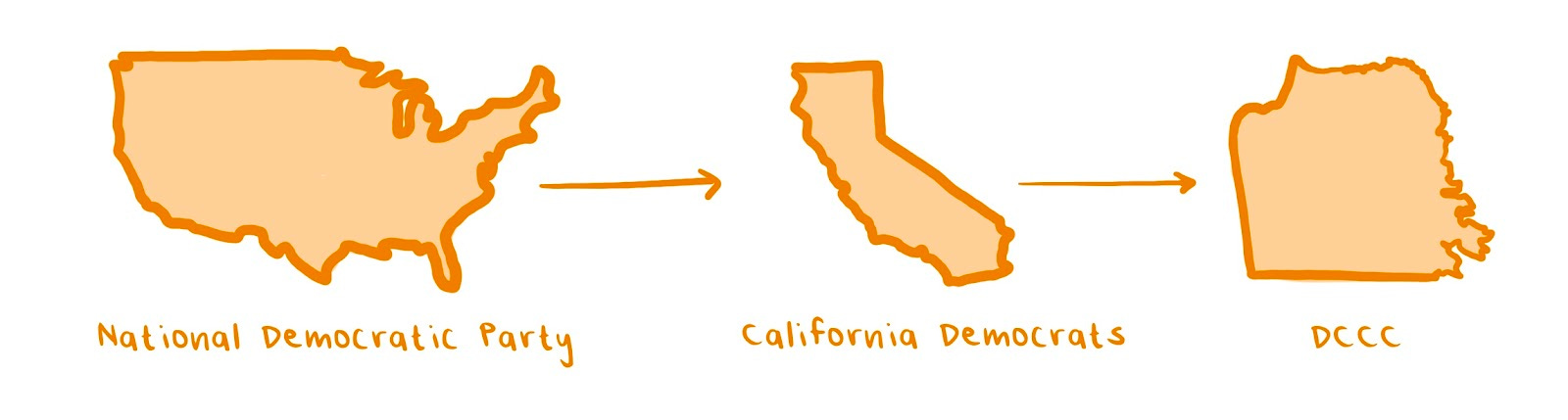
Well, the relationship between the DCCC and the California Democrats and the national Democratic Party can make the DCCC an important first step (among other options) for people looking to become influential in state or national politics.
Democratic representatives at the national and state level — like Nancy Pelosi and Scott Wiener — are also members of the DCCC (ex officio members, to be clear). This makes the DCCC a wonderful place to become acquainted with how the Democratic party works, gain mentorship from more experienced policymakers, and climb the political ranks.
What will I be voting on?
Okay, we’ve (hopefully) convinced you that the DCCC is a consequential race that you should definitely make an informed vote on. Now let’s get into what’s going to actually be on the ballot.
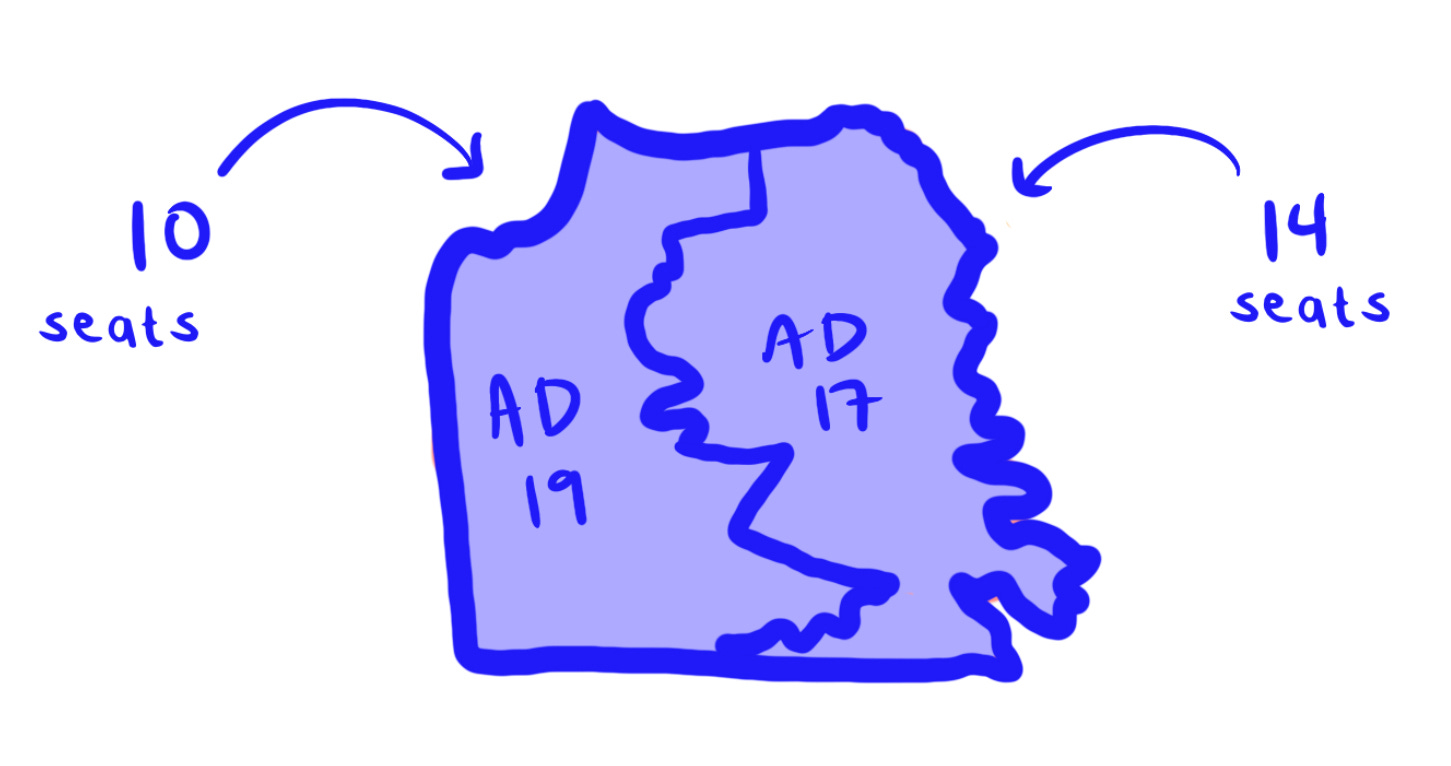
As we mentioned, the DCCC has 24 seats: 14 seats for the AD17 committee, and 10 seats for the AD19 committee.
When you get your ballot, it’s going to look a bit like a free-for-all. Depending on where you live in the city, you’ll either see 30 names listed under the AD17 race, or 21 names listed under the AD19 committee.
You have every right to mix and match your favorite candidates. But in reality, this race isn’t really about 51 individual candidates; it’s actually 2 groups of 24, each hoping to fill the DCCC with their slate. (Plus, two unaffiliated candidates in the AD17 race, and one in the AD19 race.)
The two groups are the SF Dems for Change and the Labor and Working Families. Here’s the TL;DR:
SF Dems for Change: mostly non-incumbents that are looking for more action on building housing, public safety, affordable housing, public schools, and the city’s economy
Labor and Working Families: a larger showing of incumbents that emphasizes diversity and representation in government, with affordability and safety as their priorities
If you're going to do any more research on this race (which we encourage!), we highly recommend reading each slate's policy stances. There is a lot of ideological alignment within each slate, so you'll likely see members of the same slate voting similarly on endorsements. (For example, members of SF Dems for Change would all likely vote to endorse Bilal Mahmood over Dean Preston for District 5.)
Reading more about these two groups might help simplify your voting process this March, so we definitely encourage you to read more about the positions of each slate and its candidates on their websites (linked above).
Or, you can check out some voter guides that further explain each slate:
TogetherSF Action & GrowSF for SF Democrats for Change slate
SF Bay Guardian and League of Pissed off Voters for the Labor and Working Families slate
What about the other SF Party Committees? RCCC?
Now, your ballot will only allow you to vote on the committee of the party for which you’re a registered voter.
This means you’ll only be voting on the DCCC if you’re a registered Democrat. But, if you’re a Republican, your ballot will ask you to vote for the RCCC. Same for the Green Party and the Peace and Freedom Party.
Here, we're only going to talk about the RCCC because the Green Party and the Peace and Freedom Party each have fewer candidates running than seats available on their committees. According to these parties' bylaws, these candidates automatically win, so these races aren't actually on the ballot.
In many ways, the impacts and functions of the RCCC are similar for the DCCC, except for that it represents the Republican Party. If you’ve read the rest of the post so far, then you understand why the RCCC race is important both in the context of SF politics and more broadly.
One notable difference from the DCCC is that instead of 24 seats, there are 25:
11 seats for AD17
14 seats for AD19
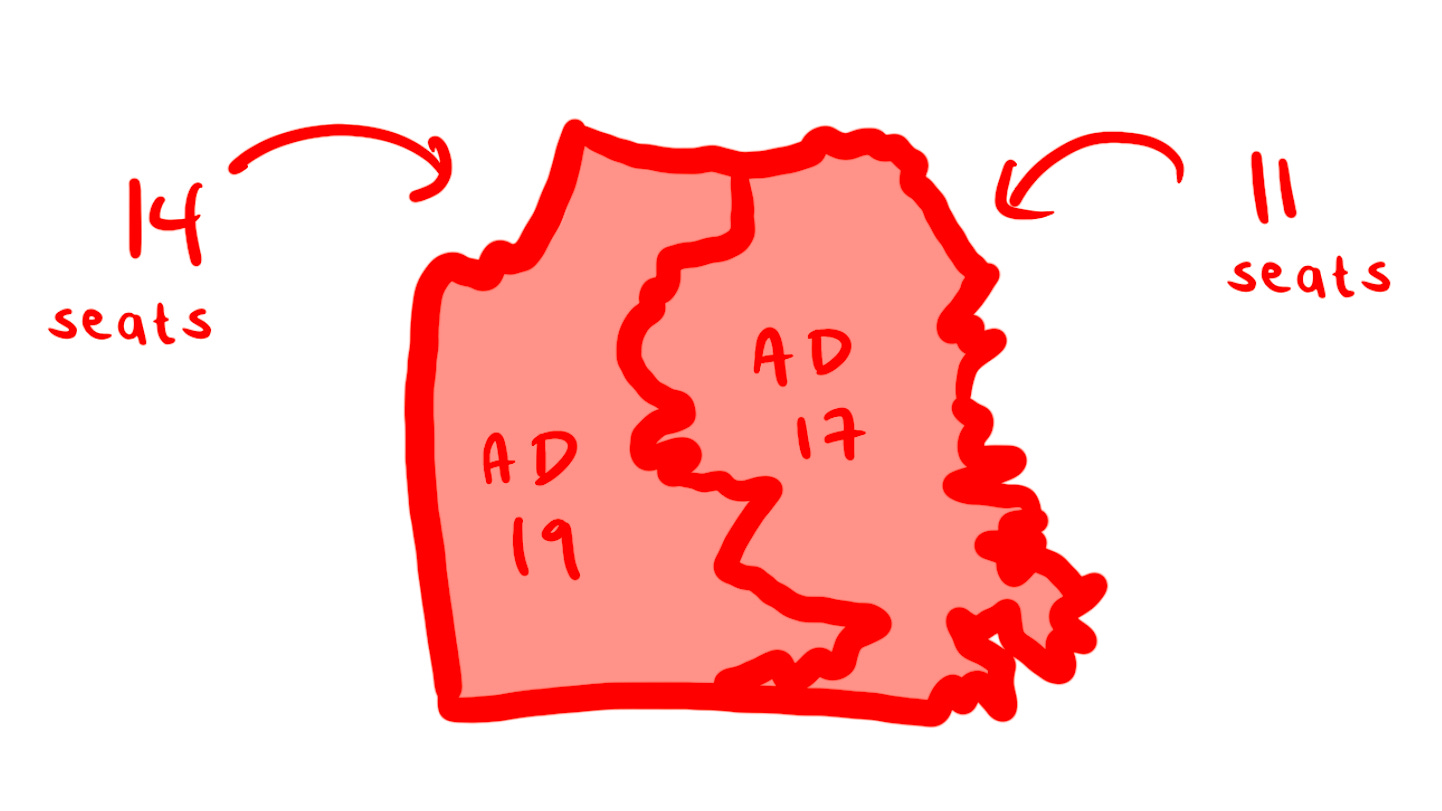
Similarly to the DCCC, the RCCC race is less about individual candidates and more about slates of candidates. The two slates are the Citizens for a Better San Francisco (which is basically the SF Republican Party) and the Briones Republicans. The SF Republican Party is more politically similar to the national Republican Party, while the Briones Society’s slate is more moderate.
We recommend checking out these two groups’ websites to understand their platforms and their candidates’ stances!
Now you know!
The DCCC and the RCCC may seem like obscure races, but they have meaningful implications for the direction of our local elections, policymaking priorities, and longer-term national politics.
Before casting your votes this March, be sure to look into the different candidate slates so you have a say in this high stakes race!